
ProductsDetails
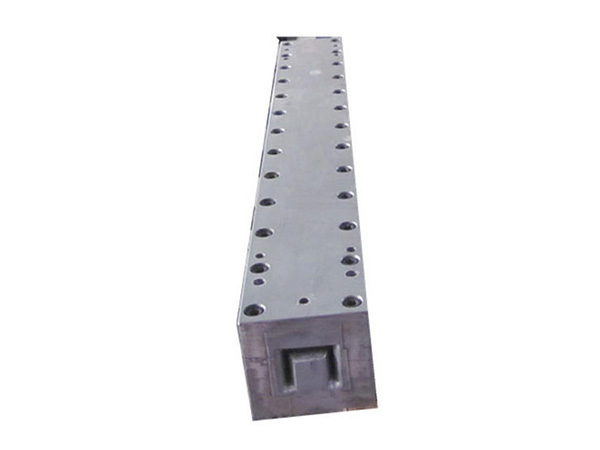
Rectangular Hollow Pultrusion Die
Rectangular hollow pultrusion die is a precision steel tool used in the continuous pultrusion process to produce glassfiber reinforced plastic (FRP) rectangular tubes, square tubes, and hollow profiles. The die defines the outer shape and inner geometry of the profile as resin-impregnated glass fibers are pulled through the heated steel cavity.
How Pultrusion Works
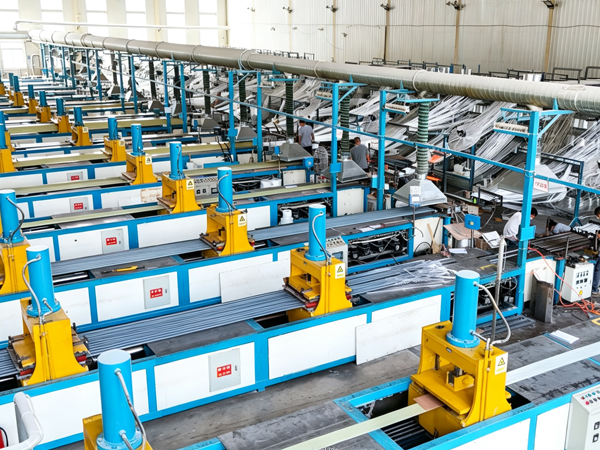
Glass rovings, continuous filament mat, and woven roving are impregnated in a resin bath (polyester, vinyl ester, or epoxy), then pulled through a pre-former and into the heated steel die. Inside the die, the resin cures under controlled temperature and pressure, and the profile exits as a rigid, dimensionally accurate rectangular tube. A puller mechanism grips the cured profile and advances it at a constant speed, while a cutoff saw cuts it to length.
Die Construction
The die is machined from high-grade alloy steel (typically P20 or H13), precision ground to the exact rectangular cavity dimensions. Heating cartridges or oil circulation channels are drilled along the die length to maintain the cure temperature, usually 120–160 °C. The entrance is chamfered to guide the fiber bundle, and the exit is polished to reduce friction and produce a smooth surface finish.
Typical Profiles
FRP rectangular tubes for structural framing, support beams, and equipment enclosures.
Square hollow sections for handrails, ladders, and platform supports.
Rectangular tubes with wall thickness from 3 mm to 10 mm.
Outer dimensions from 20 mm × 30 mm up to 200 mm × 300 mm, custom sizes available.
Applications
Rectangular hollow pultruded profiles are widely used in corrosive environments: chemical plant structures, wastewater treatment works, coastal boardwalks, offshore platform walkways, electrical cable trays, and building facade supports. They do not rust, are non-conductive, and weigh 75% less than equivalent steel sections.
Die Design Considerations
The cavity taper, heating zone layout, and land length are calculated based on resin chemistry, line speed, and profile wall thickness. A well-designed die produces a profile with consistent glass content (typically 60–70% by weight), smooth surface, and accurate dimensions.
Conclusion
A precision rectangular hollow pultrusion die is the heart of the pultrusion line. Correct die design and steel selection determine the quality, production rate, and cost per meter of the finished FRP profile.
 Recommended News
-
FRP Pultruded Profiles: Material Properties and Structural Design Guide
2026-07-06 12:00:00
-
SMC and FRP Compression Molding: Design Guidelines for Parts
2026-07-06 12:00:00
-
Cooling Tower Fill Media: Material, Design and Maintenance Guide
2026-07-06 12:00:00
-
Electric Sluice Gate: Types, Actuators and Application Guide
2026-07-06 12:00:00
-
Integrated Pump Station: What It Is and How to Select the Right Model
2026-07-06 12:00:00
Contact us
—— Contact:Ms. Wang
—— Tel:+86 19948391999
—— Email:JYFRP@outlook.com
—— Url:https://www.jinyanggep.com
—— Address:Zaoqiang County, Hengshui City, Hebei Province