
NewsDetails
FRP Septic Tank Sizing, Installation and Maintenance Guide
author:Jinyang time:2026-07-06 00:00:00 Click:173
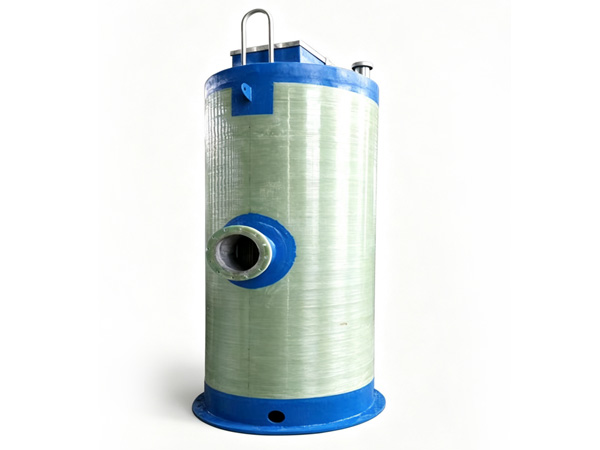
A septic tank is the first step in on-site domestic wastewater treatment. Traditional concrete and brick septic tanks are prone to leakage, cracking and offensive odors after a few years, which can contaminate groundwater. FRP (Fiberglass Reinforced Plastic) septic tanks are one-piece, watertight, lightweight and corrosion-resistant, making them the modern choice for homes, schools, resorts and remote sites. This guide explains how FRP septic tanks work and how to size and install them correctly.
How an FRP Septic Tank Works
Wastewater enters the tank and settles into three layers: sludge at the bottom, clarified water in the middle, and scum on top. Anaerobic bacteria in the sludge decompose organic matter. The clarified effluent flows out to a soakaway, drain field or secondary treatment plant. Because the tank is sealed and one-piece, there is no leakage and no root intrusion.
Sizing by Number of Users
| Users | Minimum Tank Volume | Typical Application |
|---|---|---|
| 1-5 persons | 1.5-2 m³ | Single family home |
| 5-10 persons | 2-4 m³ | Small home / guesthouse |
| 10-30 persons | 4-10 m³ | Village, school, small resort |
| 30-100 persons | 10-30 m³ | Community, hotel, industrial canteen |
| 100+ persons | Custom engineered | Township, plant camp |
These are minimum values; a safety factor of 20-30% is recommended when the site has high water tables, long pump-out intervals, or intermittent heavy use (holiday homes).
Installation Steps
Dig a trench slightly larger than the tank, level a sand bed of 100-150 mm, then lower the tank gently. Backfill with sand or fine soil in 300 mm lifts, and at the same time fill the tank with water to prevent floatation. The inlet and outlet should be at the correct invert levels. Add a concrete collar around the manhole cover if the tank is under a driveway. After installation, check for leaks before covering.
Maintenance
Pump out the sludge every 1-3 years depending on use. Do not dispose of cooking fat, solvents, sanitary towels or chemicals into the tank, as these kill the bacteria. Inspect the inlet and outlet tees once a year. A properly maintained FRP tank will last 30 years or more with no corrosion.
Why FRP Over Concrete
| Metric | FRP Tank | Concrete Tank |
|---|---|---|
| Watertightness | One-piece, zero leakage | Joint leakage common |
| Weight | Light, quick install | Heavy, long install |
| Service Life | 30+ years | 10-20 years |
| Groundwater Contamination | Negligible | Common |
Conclusion
An FRP septic tank sized to the correct number of users and installed on a sand bed with simultaneous water filling provides decades of trouble-free service. Hebei Jinyang Environmental Protection Equipment Co., Ltd. supplies FRP septic tanks from 1 m³ to 50 m³, with drawing and sizing support for residential and municipal projects.
References
EN 12566-1 — Small Wastewater Treatment Systems for<50 PT (Precast Septic Tanks)
 Recommended Products
 Contact us
—— Contact:Ms. Wang
—— Tel:+86 19948391999
—— Email:JYFRP@outlook.com
—— Url:https://www.jinyanggep.com
—— Address:Zaoqiang County, Hengshui City, Hebei Province